Easy Beginner Crochet Patterns: Free Dishcloth Tutorial
These cotton dishcloths feel substantial in your hand, offering a nubby texture that grabs onto stuck-on food bits better than flimsy store-bought sponges. They work well for beginners practicing consistent tension or anyone needing a practical gift that lasts for years. You will learn the basics of turning rows and maintaining straight edges while building a tool that fits comfortably in your palm. This project is a quiet way to occupy your hands for a few hours in the evening. Grab your favorite hook and a single ball of yarn to start building your own collection today.
Why You’ll Love This Pattern
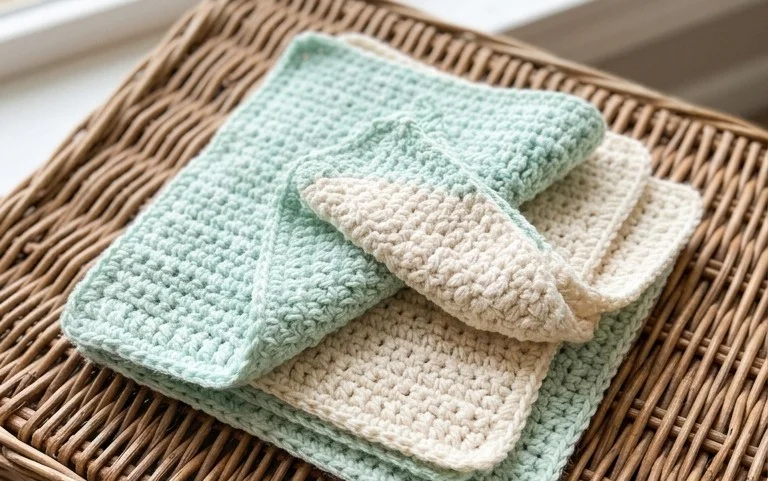
The Classic Crochet Dishcloth is a functional staple for every kitchen, offering a dense, textured fabric that excels at scrubbing dishes. This design uses a repeating stitch pattern that builds quickly, making it an ideal project for practicing consistency in your tension. Because it uses less than one skein of cotton yarn, it serves as a practical way to use up leftover ends from larger projects. Its durability ensures it survives repeated washings while remaining soft enough for delicate surfaces.
I finished this dishcloth in one evening while watching television. The texture is much thicker than the store-bought versions and it handles heavy scrubbing with ease.
— Sarah, home crafter
Pattern Overview & Skill Level
- Skill Level: Beginner
- Approximate Time: 1 to 2 hours
- Construction: Worked in rows from the bottom up, finishing with a simple border
- Finished Dimensions: 8 inches by 8 inches
Materials & Supplies Needed
- Yarn: Worsted weight (#4), 100% cotton, approximately 80 yards. Cotton is essential for absorbency and heat resistance.
- Hook Size: 5.0 mm (US H-8)
- Notions: Tapestry needle for weaving in ends, scissors, and optional locking stitch markers to keep track of row ends.
- Yarn Substitutions: You may use a cotton-acrylic blend, though it will be less absorbent than pure cotton. Avoid wool or synthetic acrylic, as they do not handle kitchen heat or heavy moisture as effectively.
Stitch Guide & Abbreviations (US Terms)
- ch: Chain
- st(s): Stitch(es)
- sc: Single crochet
- dc: Double crochet
- sk: Skip
- YO: Yarn over
- Seed Stitch: A repeating pattern of (sc in next st, dc in next st) across the row.
Step-by-Step Pattern Instructions
Dishcloth Body
- Row 1: Ch 27. Sc in the second ch from hook. Dc in the next ch. Continue alternating sc and dc until you reach the end of the chain. Turn. (26 sts)
- Row 2: Ch 1. Sc in the first dc of the previous row, dc in the first sc. Continue the seed stitch pattern across the row. Turn. (26 sts)
- Rows 3-24: Repeat Row 2 until the piece measures 8 inches long.
Border & Finishing
- Rnd 1: Do not fasten off after the final row. Ch 1, work 26 sc across the top edge. At the corner, work 3 sc in the same space to turn. Work 26 sc down the side, 3 sc in the corner, 26 sc across the bottom, 3 sc in the corner, and 26 sc up the final side.
- Closing: Join with a sl st to the first sc of the round. Fasten off and use your tapestry needle to weave the loose ends securely into the fabric, moving in both directions to prevent unraveling during use.
Care & Washing Instructions
- Machine wash in warm water with like colors to prevent dye bleeding.
- Tumble dry on low heat or lay flat on a drying rack to maintain the square shape.
- Reshape the dishcloth with your hands while it is still damp if the edges begin to curl after multiple laundry cycles.
Pro Tips & Common Mistakes to Avoid
Consistent tension is vital for a flat result; if your edges look uneven, check that your first and last stitches of each row are not being skipped or accidentally doubled. Use a stitch marker on the first stitch of every row to ensure you maintain exactly 26 stitches, which prevents the dishcloth from becoming trapezoidal. When weaving in your ends, run the tail through several stitches in opposite directions to ensure the yarn does not pull out when wet. You can adjust the size by chaining an even number of stitches at the start; however, note that increasing the size will require extra yarn and increase the weight of the dishcloth when wet.
Frequently Asked Questions
Can I use a larger hook for this pattern?
Yes, using a larger hook will make the fabric looser and more open, which reduces the scrubbing power. If you change your hook size, use a larger one only if you prefer a drape-like texture rather than a dense cloth.
Why is 100% cotton recommended?
Cotton is a natural fiber that wicks moisture and withstands high temperatures from hot water or surfaces. Other fibers like polyester may melt or remain slick instead of absorbing soapy water.
How do I make the dishcloth larger?
Simply add more foundation chains in multiples of two. To maintain a perfect square, increase the number of rows to match the width you created.
Can I sell the dishcloths I make?
You are welcome to sell finished items created from this pattern. I ask that you credit the design and use your own photographs when listing items for sale online.
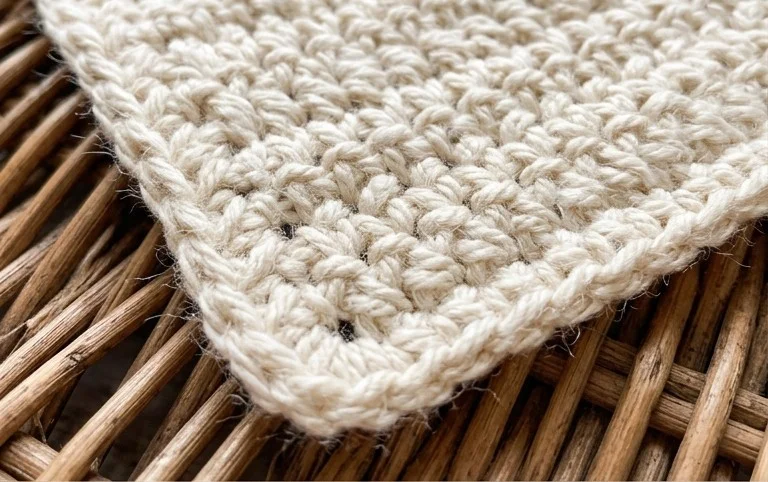
Your finished dishcloth holds up through hundreds of hot water cycles and adds a bit of handcrafted utility to your kitchen sink. You can change the aesthetic by alternating colors every two rows or by adding a simple shell stitch border for a decorative flair. Share a photo of your creation on social media to show off your new skill. Check back on the blog to find more beginner-friendly projects that use basic stitches to create useful items for your home and daily routine.